
woodblock printing
Key Takeaways :
- Woodblock printing is one of the oldest types of relief printing that involves using raised parts of a woodblock with ink for printing directly onto paper.
- During the Edo period, Japanese Ukiyo-e artists perfected the technique and made it a multiblock coloring procedure, which was used to print scenes of everyday life, landscapes, and theatre.
- This technique of woodblock printing entails cutting out everything from the woodblock except the design, inking it, and pressing the raised area.
- Today, contemporary artists continue to manually carve and print their woodblocks, which shows how little this technique has evolved since its early days.
- It can be done at home with patience and proper equipment.
When observing famous works of Hokusai’s art, such as The Great Wave, or even modern woodblock prints, one can be shocked to find out that the whole picture is created from carved surfaces, not from painted brush drawings on the paper.
However, for a beginner, it might be quite challenging to figure out how these carved parts are used to create the final image. The knowledge of every step in the process will help one to see that each of the steps in the process has its own importance in producing the image. Although the technique has changed a little bit since the times of ukiyo-e, the core principle of transferring the image is still the same.
In this guide, we will explain woodblock printing in an easy way, learn about its evolution from classic ukiyo-e style to modern art, and understand the process step-by-step. Read on to learn how a woodblock can be turned into an art form through different stages of printing.
Table of Contents :
- What Is Woodblock Printing?
- The History of Japanese Woodblock Prints
- How Does Woodblock Printing Work?
- Traditional vs. Contemporary Woodblock Printing
- Can Woodblock Printing Be Done at Home?
- Why Japanese Woodblock Prints Still Matter Today
- Woodcut's Lasting Legacy
- FAQs
1) What Is Woodblock Printing?
Woodcut printmaking, which is an alternative term for this process, falls into the relief printing category. In relief printing processes, as opposed to the Intaglio process in which the ink is applied to the carved spaces, carving is done on the background while leaving the design on the surface. For a closer insight into the application of relief printing, Woodblock Print demonstrates the approach taken by a modern artist to a blank block.
Ink is applied only to the raised areas. Therefore, when the paper presses against the wood block, the ink is transferred to the untouched raised parts of the block, thus creating a graphic image.
2) The History of Japanese Woodblock Prints

Ukiyo-e Japanese woodblock prints became famous during the Edo period. It is a period between the 17th and 19th centuries. The artwork was done by artists like Hokusai and Hiroshige, depicting “pictures of the floating world” consisting of landscapes, Kabuki performers, and scenes from everyday life to be appreciated by the newly rising merchant class.
The unique feature of these prints was the multicolor printing technique they employed. They made use of various blocks to print different colors in a certain order to produce the whole picture. In a scientific study done in 2022, through multiband imaging and spectroscopy, it has been revealed that these prints were printed using a very detailed process.
3) How Does Woodblock Printing Work?
Then how does woodblock printing work from beginning to end? The whole procedure has a systematic approach no matter where it is done, from 18th-century Japan to today. Here are the steps:
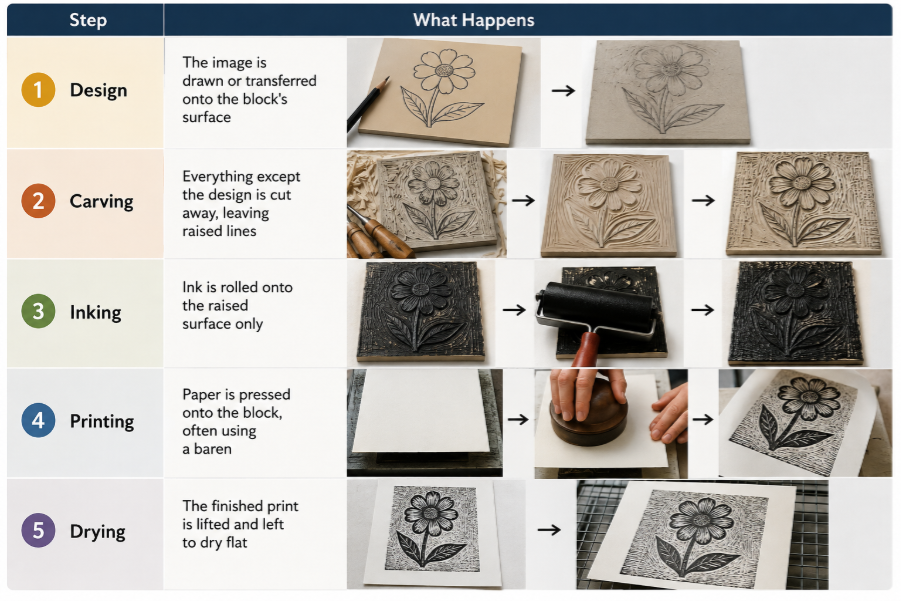
In traditional Japanese printmaking, the artists use a tool called the baren, which is like a hand-held round pad used to rub the reverse side of the paper in order to distribute the ink evenly without using a machine.
4) Traditional vs. Contemporary Woodblock Printing :There was division of labor in the creation of this type of artwork in the past, whereby there was a designer to design the artwork, a carver to carve it, and a printer to print it. Modern artists usually undertake all activities of making the art on their own. This does not imply that there is no value put on the artwork anymore. From a study carried out in 2024 on the significance of this type of artwork in the modern world, it is evident that the interest that collectors, the fashion world, and illustrators have placed on this artwork has made it extremely significant in the modern world.
5) Can Woodblock Printing Be Done at Home?

Can woodblock printing be done at home? Yes, and it is one of the reasons why this type of printing technique has survived. The only thing you will need for that is a carving block, engraving knives, water- or oil-based ink, a roller, and a pressing tool; even a wooden spoon would be okay.
The first step for any beginner is to practice single-colored prints before moving to the complicated multiblock registrations like the Japanese Ukiyo-e printmakers used. It requires patience because the carved-away wood can't be brought back.
6) Why Japanese Woodblock Prints Still Matter Today :
Not only did the Japanese woodblocks serve as a chronicle of their era; they influenced the movements that came after them by means of coloring, composition, and flattened perspective. The influence of the Japanese prints on impressionists started during the nineteenth century and continues to influence contemporary illustrators, tattoo artists, and graphic designers.
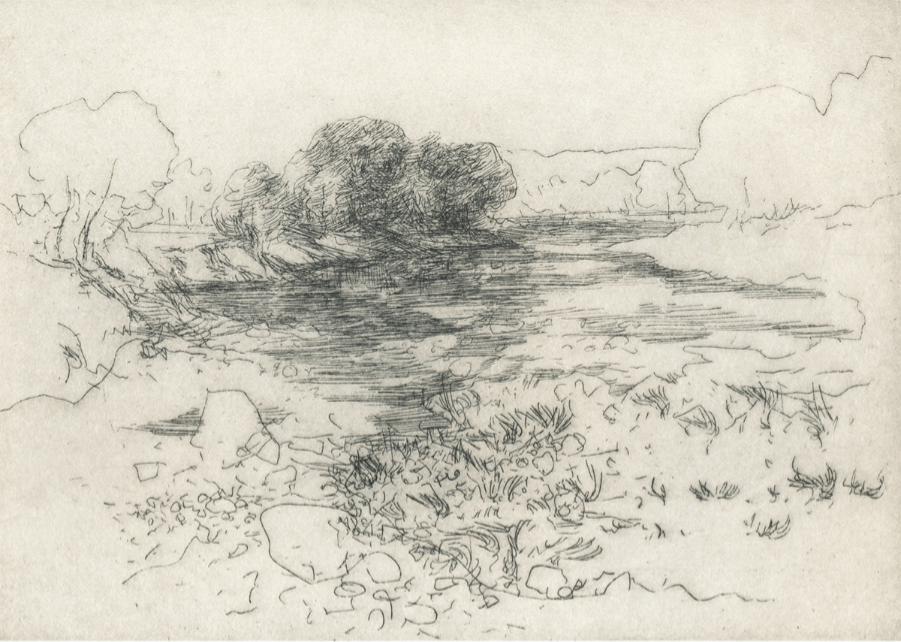
For people who are curious about how other methods of hand-cutting look, here is one of the burin engravers specializing in his technique, which shows how much discipline is necessary in direct incisions.
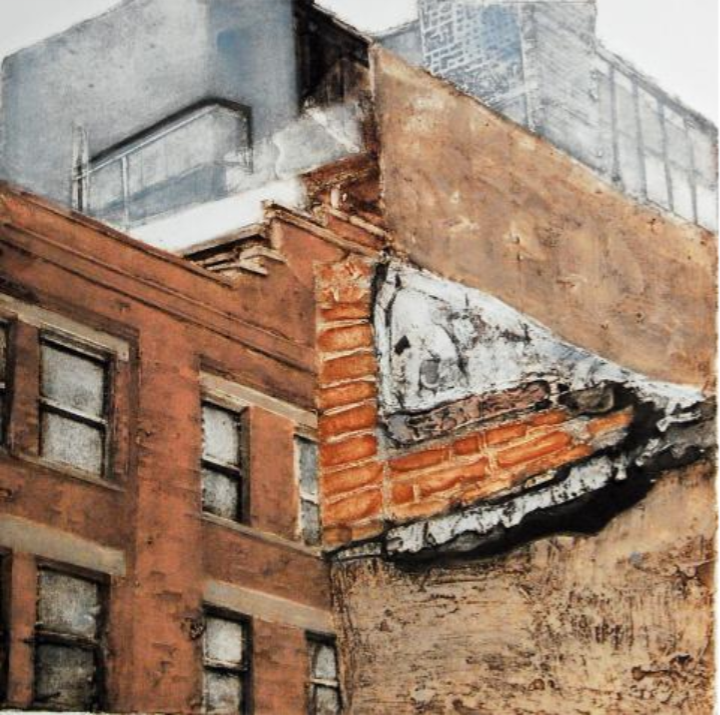
Furthermore, for people who want to know more about how other printing techniques have been used throughout history, the Collagraph Technique demonstrates how different layers influence each other, giving information on relief printing as opposed to intaglio printmaking techniques.
7) Woodcut's Lasting Legacy :
Woodcutting is an art form that will always thrive since its success depends on how much you put your heart into something and how much time you spend creating something that cannot be done using any other method of printing.
Whether working on one woodcut block alone at home or combining several at once like some Edo period artists, the essence stays the same.
Take a closer look at the process behind woodblock printing and see the artistry hidden within every carved line and printed layer.
8) FAQs :
- What is woodblock printing and how does it work?
- Woodblock printing is a relief technique in which the ink is contained in the raised areas of the woodblock and is printed on the paper when pressed.
- How are Japanese woodblock prints made?
- Japanese Ukiyo-e woodblock prints are made using several hand-carved blocks, with each block inked to make a particular color.
- How can I make my own woodblock print?
- The process involves removing the areas not wanted, inking the remaining areas, and then applying paper to these areas using a roller, spoon, or baren.
- Why are Japanese woodblock prints significant in the history of art?
- Japanese woodblock prints have had a lot of influence in shaping modern Western art movements like Impressionism and still influence illustration and design to date.
- What materials are required for making woodblock prints?
- The materials required for woodblock prints include a wood block, water-based ink, paper, and a baren.